![Veridiction Consulting, Independent Educational Consultant [Logo]](https://veridiction.com/wp-content/uploads/2025/07/cropped-cropped-Image-1.png)
“The trick is to keep breathing.” –Shirley Manson
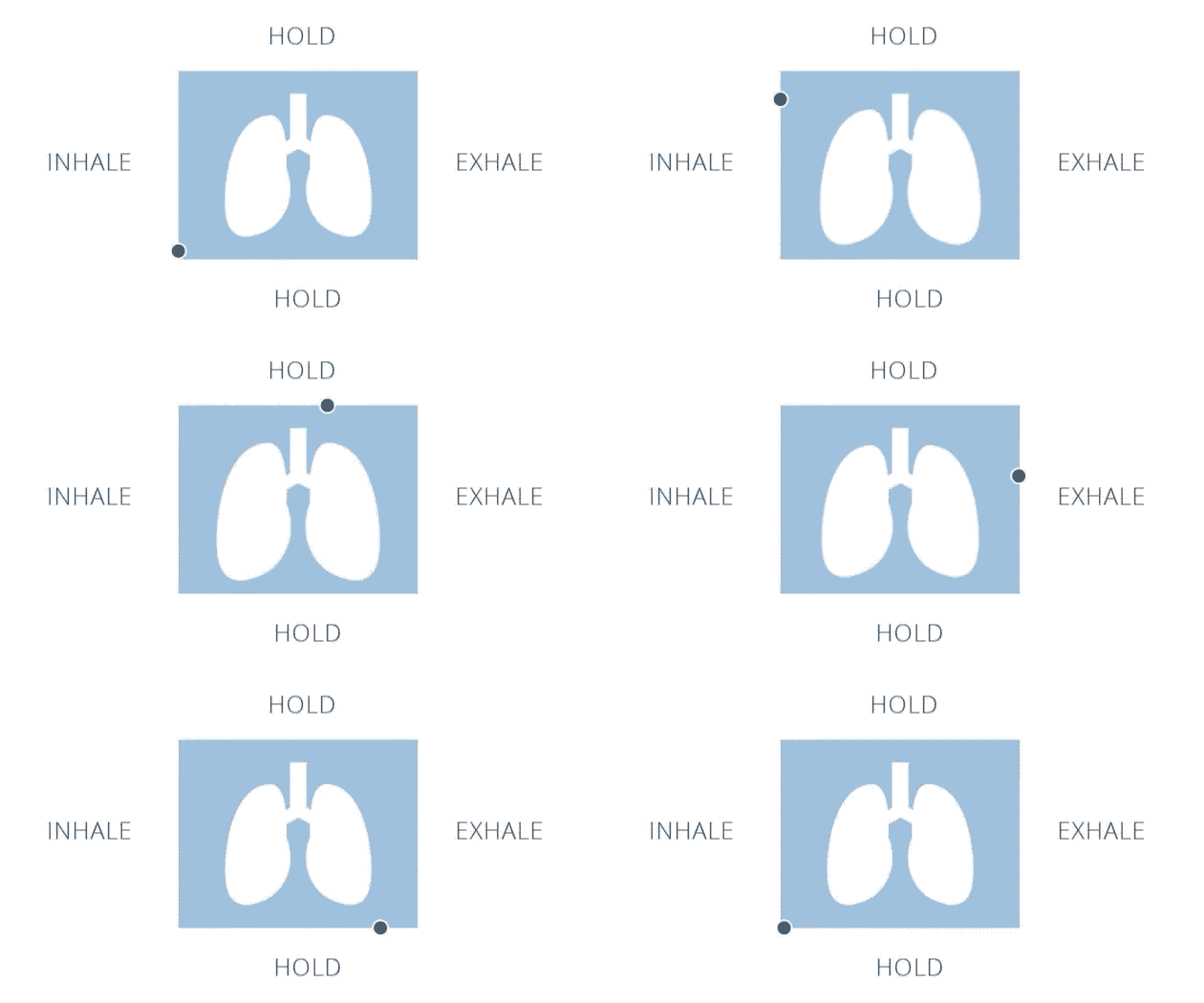
That is a box-breathing diagram and it works very well for me, I’ve had it for at least a decade. Additionally, I can suggest these supplementals:
- Calm place imagery: Close your eyes and imagine your preferred space of peace and serenity. Imagine the distance you put between you and the current environmental stressors, imagine how much longer it takes for the troubles to reach you. (For my HSP part, I also actively endorse noise-canceling headphones as a very worthwhile investment. 🎧)
- Co-regulation: If you’re too overwhelmed to cope on your own, then try to find somebody who is (actively, steadfastly) calm that you can sit and stare at for a while until your breathing and pulse slow to match their rhythm. Borrow their time and put it on your clock between the source of your panic and when you need to respond to it. This is a regression technique — as you can see from the linked material — that persists in the substrata of our social lives. It’s also why I prefer to at least sometimes meet clients in-person: being able to activate co-regulation can slow individual ego-depletion effects when working on making big choices.
- 5-4-3-2-1 technique: Acknowledge 5 things you can see, 4 things you can feel/touch, 3 things you can hear, 2 things you can smell, and 1 thing you can taste. Slow down your thinking, reconnect with your body’s sensory reality. I confess that I usually get distracted before I finish this one but it is popular.
- Feel Accurately: Think about what you are feeling. Take a moment to find a more precise word for it (using a feeling chart or wheel if it helps). Next, find an even more-precise word for it. Take one more moment to realize how small and relatively manageable the precise descriptor of your current feeling is versus the linguistically-vague feeling you started with. In addition to injecting a moment to respond to feelings instead of reacting to them, this technique should make you a more emotionally-literate person improving your ability to write about your feelings when composing personal statements, and that’s why I’m really endorsing it here. ✍️💯
- And of course, Hydrate: Drink cold water to shock yourself back to the present local moment, or prefer a particular hot tea with a specific scent — humans actively neglect smells out of social decorum but our bodies still notice them! — to do a partial calm-place shift. My preferred tea is Lemon Ginger, Jean-Luc Picard’s was Earl Grey.
Hopefully you’ve now got a few non-doomscrolling techniques for slowing down bad stimuli that might be disrupting what your brain knows it’s supposed to be doing and interfering with your self-efficacy. Feel free to suggest others; I’ll add a few and/or replace the less-effective ones.
Proactive Practices
Of course, a certain degree of ongoing active self-maintenance can improve your buffer between you and the stimuli. Anna Akana mashed them into a quick video: get sleep, exercise, sunshine, and nutrients; journal, especially the things that are pleasant to remember; keep a (CBT-based) Thought Record as explained in the back half of the video.
Bonus Craft Project: A special craft project recounted by Dr. Damour in Under Pressure (and mentioned here) is the Glitter Jar which is simply taking a small mason jar (like a “pint canning jar”) filling it with water or a slightly more viscous liquid, adding a bunch of glitter, and then hot-gluing it closed because you do not want the glitter coming out. In times of stress, stake that glitter jar (like a sparkly snow globe) and then watch it calmly all settle to the bottom of the jar (like a sparkly snow globe). This creates a (reusable!) physical focal point for your attention that, again, puts time between the invasive stimuli you’re getting and your response to it.
Future Discussion: A key transition for going off to college is proactively managing your physical health. Here’s a relevant TCEG podcast about it, fronting for this book. I have not read the book, but the quality of recommendations on the podcast indicate that the book is also full of good advice. Whatever you do, don’t follow my misadventures of nurturing a bacterial lung infection to the point of having a collapsed lung, or thinking a major case of strep throat was just a minor thing to get over ahead of Thanksgiving, or drinking old loose-leaf tea that probably had started growing a fungus, or taking Sudafed with espresso, or… honestly it’s a miracle I survived with somebody like me in charge. (To be fair to Past-Me: our health center was really Not Great which isn’t what one would expect from a school with a strong nursing program, but I established an unfortunate expectation of non-helpfulness with them and didn’t have an alternate local provider.)